China Pulls Back Fuel Shipments
Chinese oil refiners are now canceling already-agreed export cargoes of gasoline and diesel, according to Bloomberg sources, as Beijing tightens export curbs in response to Middle East supply disruption. The move comes as conflict in Iran threatens passage through the Strait of Hormuz, which handles roughly 20% of global oil trade. "I think this oil chart is a fake out, I think oil is going to go back up, we just had news that IRAN is potentially dropping mines in the strait of Hormuz" — @SHWEPPS_.
Aluminum Warehouses See Mass Withdrawals
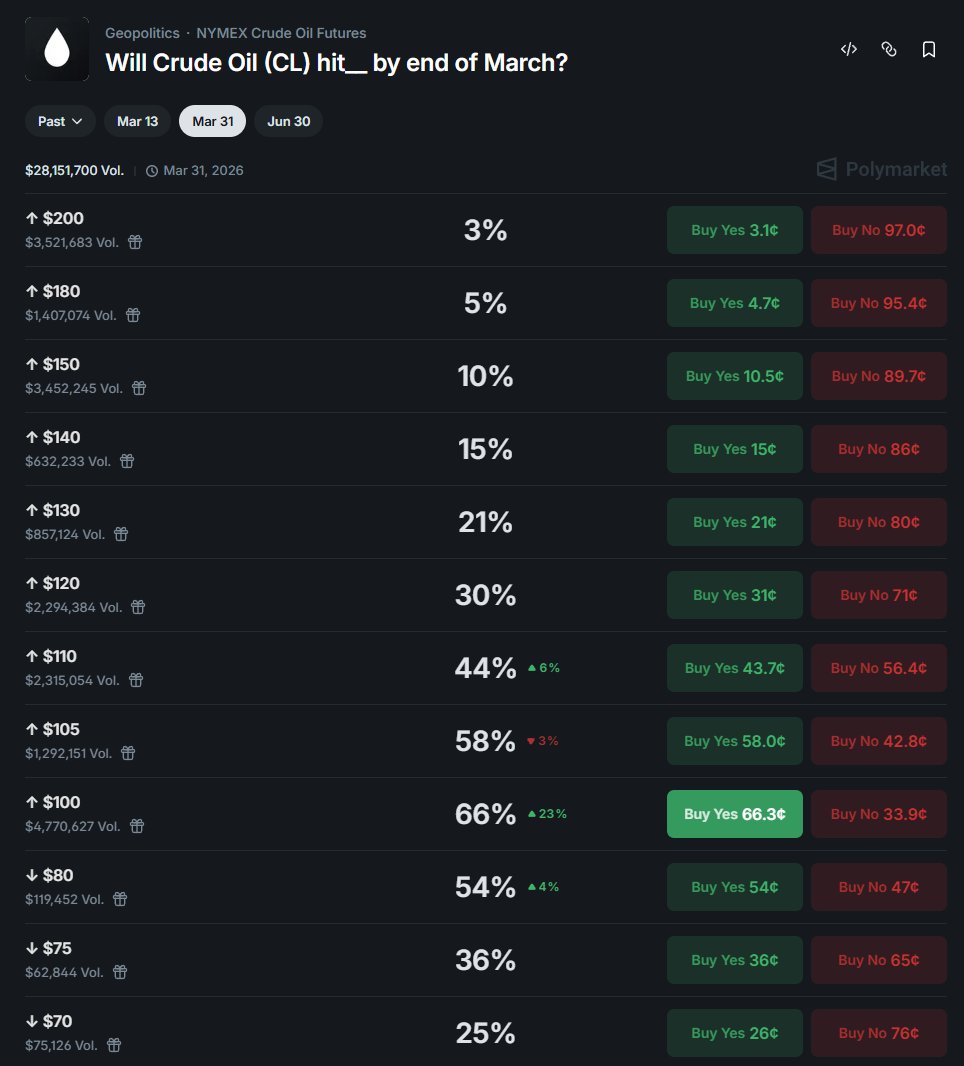
Mercuria Energy Group Ltd. led a surge in orders to withdraw aluminum from London Metal Exchange warehouses, Bloomberg reports, as traders position for supply shocks from the effective closure of the Strait of Hormuz. The withdrawal wave reflects expectations that aluminum flows — critical for everything from beverage cans to aircraft parts — will be severely constrained. As @EasyEatsBodega observed, "Oil volatility isn't going to slow down imo... Taking a straddle on Oil is probably a good idea. Looking at $130 at 20c && $75 at 36c."
Fertilizer Crunch Threatens Food Inflation
The Iran conflict is disrupting fertilizer shipments through the Strait of Hormuz, CNBC reports, raising the specter of sustained food price inflation. The fertilizer supply chain relies heavily on Middle Eastern production and shipping routes now under threat. Meanwhile, coffee prices remain at record highs despite a drop in commodity futures for beans — a signal that supply chain snarls outlast the headline commodity moves. Morgan Stanley now predicts Federal Reserve rate cuts could be "delayed, and potentially deeper" due to the Iran situation, per Polymarket.
Markets Price 44% Odds on Quick Resolution
Traders are pricing a 44% chance that Strait of Hormuz traffic returns to normal before the end of next month, according to Polymarket data. That implies better-than-even odds the disruption extends into May, with cascading effects on fuel, metals, and agricultural inputs. Reports suggest Trump is preparing to invoke Cold War-era powers to revive oil production off the California coast — a potential supply response if Middle Eastern flows remain constrained. For prediction market traders, the question isn't whether commodities are volatile — it's which supply chains break first, and how long Washington takes to respond.